Asiago Food
The responsibility and commitment that define us as individuals and as a company are reflected in the conscious choices we make every day and the projects we choose to support. As global citizens, one of our primary roles is to care for the earth we inhabit, respecting it and minimizing the impact of human activity.
Organic farming fits perfectly into this vision: it is a method aimed at producing food using natural substances and processes, encouraging the responsible use of energy and water resources, and the preservation of local ecological balance and biodiversity.
Organic Farming Techniques
Organic farming significantly limits human impact on the environment by relying on specific production techniques that consider the entire agricultural ecosystem. These methods primarily utilize renewable resources within locally organized farming systems.
Soil cultivation is carried out using exclusively natural resources, limiting the use of synthetic chemical inputs and strictly excluding GMOs (genetically modified organisms) and their derivatives.
Organic farming is based on five core actions:
- Enhancing and increasing organic fertility: the goal is to improve the quantity and quality of soil organic matter through the use of composted organic fertilizers.
- Crop rotation: this technique involves varying the species grown on the same land to enrich the soil and prevent the onset of pests or diseases.
- Selecting suitable varieties: a key aspect is choosing varieties that best adapt to the local territory, based on their natural resistance to environmental challenges.
- Planting hedges and trees: hedges and trees are true allies for crops. They not only enhance the landscape but also protect plantations by hosting natural predators of pests and acting as a barrier against pollutants.
- Intercropping: this refers to growing different plant species simultaneously on the same plot to fully utilize soil fertility and benefit from the synergistic interaction between different plants.
Organic Production: Wild Mushrooms and Berries
We have seen the basic principles and techniques of organic farming. But how do organic production rules apply when products grow spontaneously in nature, such as in agricultural areas or forests?
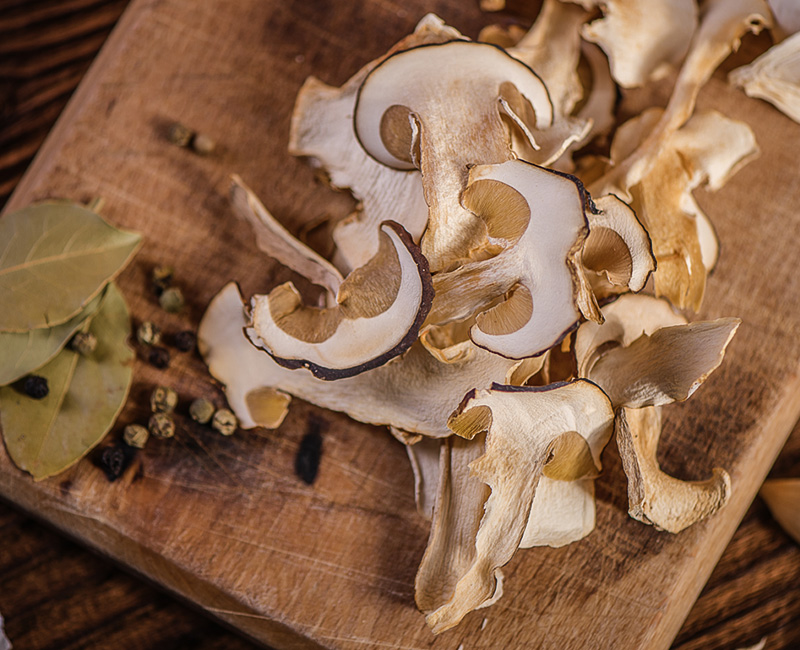
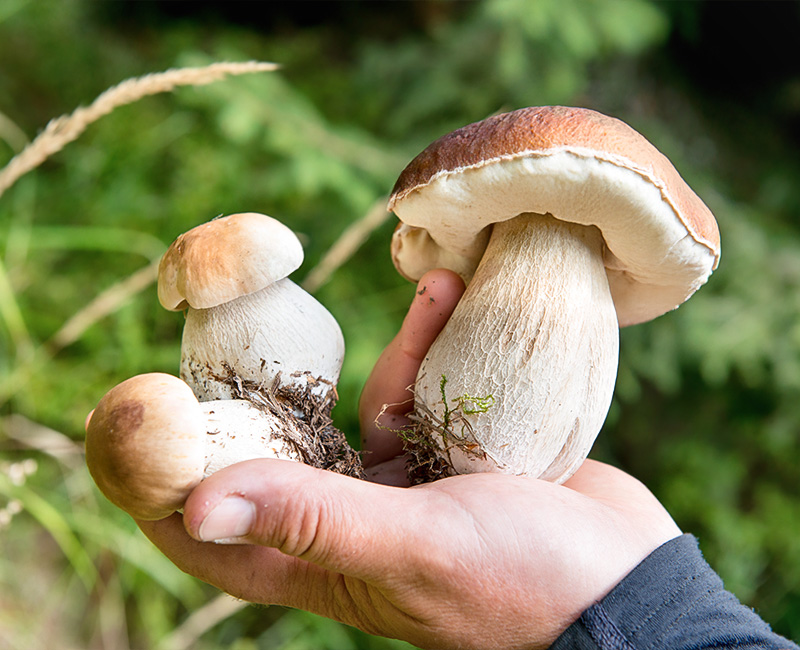
The harvesting of wild plants, such as wild berries and forest mushrooms, is considered an organic production method provided that the harvesting areas have not been treated with unauthorized products for at least three years prior to harvest. Furthermore, harvesting must not compromise the balance of the natural habitat or the conservation of indigenous species.
In short, even the gifts that nature offers spontaneously every day can be produced following organic methods, guaranteeing harvest quality while simultaneously respecting the environment.
Why Choose Organic Products
Choosing organic products is a testament to our bond with the land and the creatures that inhabit it.
Not only are the products resulting from this type of agriculture more natural and the soil better protected, but organic crops are also a sanctuary for wild animal species. In recent decades, intensive farming has dangerously harmed these species; the Farmland Bird Index shows that the bird population in EU agricultural areas has dropped by 52% over the last thirty years.
Sustainable agriculture can reverse this trend by treating agricultural habitats as a value to be protected. The standards adopted by organic farmers ensure a welcoming environment for species essential to biodiversity, such as hedgehogs, owls, and bees.
Ultimately, thanks to “natural” harvesting and cultivation methods that exclude synthetic products and GMOs, the result is food that is tastier, nutrient-rich, and full of vital active principles.
Asiago Food’s Commitment to Organic
At Asiago Food, we understand the importance and power of organic farming. This is why we are committed to bringing organic, healthy, and delicious products to your table—good for you, and even better for the environment.
All our cultivation and harvesting areas are supervised by expert agronomists specializing in organic farming. Our certified organic products, including porcini mushrooms and berries, are regularly monitored throughout every stage of the supply chain. They come from harvests obtained without the aid of synthetic products, respecting the raw materials and their habitat by following the natural cycle of the seasons.