 Asiago Food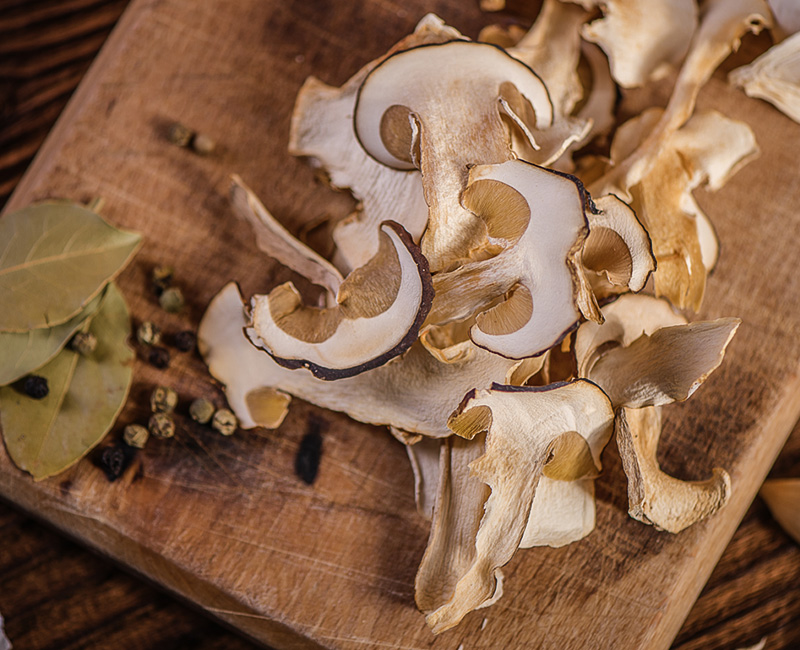
When browsing the dried mushroom aisle, the visual difference between one package and another is unmistakable: on one side, you see pristine, whole slices; on the other, a darker and more varied mix. Have you ever wondered what defines this difference, and why some labels are marked “Extra” while others are labeled “Speciale” or “Commerciale”?
It’s far more than an aesthetic or marketing choice. In Italy, the sale of mushrooms is governed by strict regulations (such as D.P.R. 376/95) designed to protect consumers and establish precise quality standards for the premium ingredients we bring to our kitchens.
Let’s explore how to navigate these categories and how to read the label correctly to ensure you are making an informed, high-quality purchase.
The Porcini “ID Card”
We often think of “Porcino” as a single mushroom variety. In reality, it is a protected designation that can only be applied to four specific edible species within the Boletus genus.
These four species are the only ones that offer that unmistakable blend of earthy aroma, rich flavor, and meaty texture:
- Boletus edulis: the quintessential Porcino, typically found among beech and spruce trees, dominating the harvest in autumn.
- Boletus aereus: known as the “dark Porcino,” it is a gourmet favorite for its firm texture and intense fragrance.
- Boletus pinicola: the “pine Porcino,” easily recognized by its beautiful garnet-colored cap.
- Boletus reticulatus: the “summer Porcino,” which appears in late spring offering a delicate, sweet flavor profile.
Why does this matter? This distinction ensures that your selection contains only the finest foraged mushrooms, excluding lesser varieties that could compromise the final taste of your dishes.
Understanding quality grades for dried porcini
Regulations divide dried porcini mushrooms into specific quality grades. Under the supervision of a certified mycologist, grading is determined by slice size, integrity, color, and the presence of ‘larval tracks’. These small, natural tunnels, which may occasionally be found in wild mushrooms, do not affect edibility; they simply reflect the mushroom’s spontaneous development in its natural woodland environment.
EXTRA: the premium choice
This is the highest grade of Porcini available. Slices must be wide, intact, and range in color from creamy white to a very light hazelnut.
- Visual appearance: no dark spots or natural markings. The bottom of the package should be “clean” and free of debris or dust.
- In the kitchen: the ultimate choice for refined recipes where the beauty of the whole slice enhances the presentation of the dish.
SPECIAL: the perfect balance
These are high-quality mushrooms that may show slight aesthetic variations.
- Visual appearance: slices are slightly less uniform than the Extra grade, featuring a natural variety of warm, golden-hazelnut tones.
- In the kitchen: a versatile choice, perfect for risottos and pasta sauces where you want both a robust flavor and clearly recognizable pieces of mushroom.
COMMERCIAL: flavor and value
In this category, the focus shifts from aesthetics to flavor only. This is the most widely used grade, and less-prized, frequently found in mushroom blends.
- Visual appearance: slices are smaller or fragmented, with a deeper, darker color. ‘Larval tracks’ (which are completely safe and natural) are common and accepted within this grade.
- In the kitchen: the smartest choice for soups, stews, or for creating a flavorful base for sauces: the Porcino taste is guaranteed while being budget-friendly.
CRUMBS and POWDER: pure versatility
Crumbs and powder result from the processing of higher grades, and are primarily intended for further transformation. Briciole (crumbs) are perfectly suited for enriching fillings and stuffings, while Polvere (powder) acts as a true “forest concentrate”, ideal for infusing an intense mushroom flavor into any culinary creation.
Numbers that guarantee safety
Beyond quality grades, every producer must adhere to strict technical parameters by law:
- Moisture content: dried mushrooms must have a maximum humidity level of 12%. This ensures the product remains perfectly preserved while locking in its original aroma.
- Mycological certification: every batch is inspected by a professional mycologist. Their certification is your guarantee that the package contains only safe, authentic species.
- Shelf life: in Italy, the standard best-before date for dried mushrooms is 12 months, while it is often extended to 24 months abroad. While the product remains safe beyond this window, it may gradually lose the peak intensity of its flavor and scent.
READ ALSO: Do dried mushrooms expire?
Bringing the forest to your kitchen
Choosing dried Porcini is an act of trust in the experts who select and package them. At Asiago Food, we believe transparency is the most important ingredient in any recipe. That’s why we oversee every step, from professional inspection to manual packaging, to ensure you receive only the very best of the forest.
Understanding these quality grades is the first step toward cooking with confidence and expertise. Now that you can distinguish between the different varieties, simply choose the one that best suits your next culinary adventure and bring the authentic taste of the Italian forest to your table!


