Asiago Food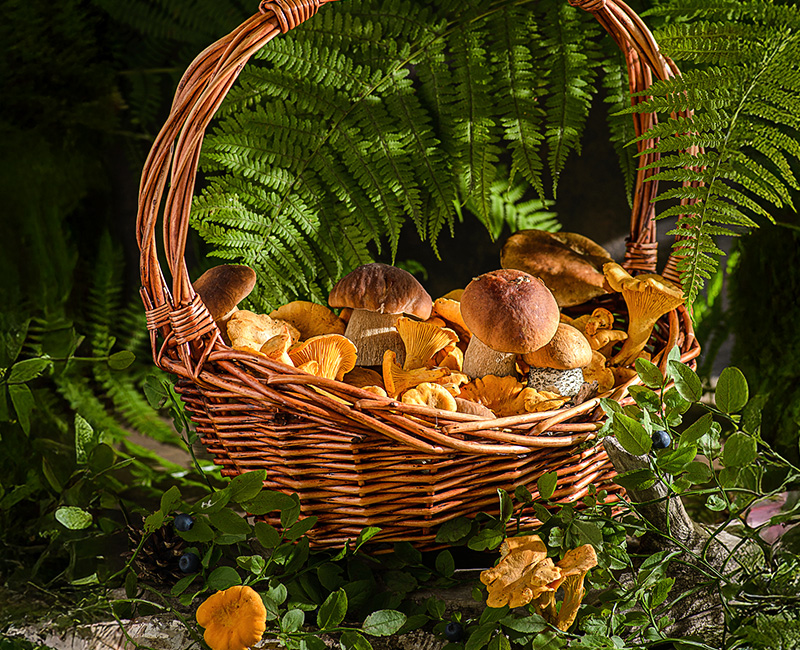
Forests are a precious treasure that gifts us every year with delicacies like wild berries and mushrooms. Entering this ecosystem, however, requires awareness: the undergrowth is a fragile balance where every organism plays a vital role. Becoming a “good forager” does not just mean finding the best mushrooms, but protecting the forest so that it can continue to provide for us in the future.
Know before you go: permits and local rules
Before setting out, it is essential to inform yourself about local rules. Harvesting is not free everywhere, and fines can be substantial.
- Harvesting permits: almost everywhere in Italy, a permit or “tesserino” (daily, weekly, or annual) is required. These can be purchased at local municipalities (Comuni), park authorities, or authorized local businesses.
- Territorial verification: laws vary from region to region (and sometimes between municipalities). Always consult the official website of your destination Region or Province to check for “no-harvesting” days or specific local bans.

Hunting for mushrooms in the woods
Debunking common myths
Folk wisdom is fascinating, but in mycology, it can be dangerous. Let’s clear things up:
- The lunar cycle: there is no scientific evidence that the moon affects mushroom growth. Growth depends on a perfect combination of soil moisture, air temperature, and thermal shocks.
- Radioactivity and pollution: mushrooms are “accumulators.” While Porcini are generally safe, it is crucial to avoid foraging near busy roads, industrial sites, or agricultural areas treated with pesticides.
- “Friendly” trees: while it is true that Porcini love chestnut, beech, and fir trees, their symbiosis is complex. They can also appear under birch trees or blueberry bushes, depending on the microclimate.

Gifts from the undergrowth
The ethical forager’s decalogue
To safeguard the environment, every gesture counts. Here are the golden rules:
- Maximum quantity: generally, the limit is 3 kg per person, but beware of protected species (such as Caesar’s Mushroom or St. George’s Mushroom) which have stricter limits (often 1 kg).
- Harvesting technique: the mushroom should be extracted whole with a gentle twist, without digging. This allows for correct identification of the base (essential for distinguishing edible species from poisonous ones).
- Immediate cleaning: roughly clean the mushroom on the spot with a small knife. The spores must remain in the forest to ensure the growth of new specimens.
- The container: the use of a wicker basket or aerated containers is mandatory. Plastic bags are forbidden because they accelerate mushroom decomposition and prevent spore dispersal.
- Respect for the unknown: do not trample or destroy mushrooms you do not recognize or think are poisonous. Every mushroom is a link in the ecological chain.
Equipment and personal safety
Mushroom hunting is a physical activity that requires caution:
- Clothing: high boots with treaded soles (to prevent slips and snake bites), long trousers, and a waterproof jacket.
- Safety: never go alone and always share your itinerary with someone. Carry a fully charged phone, but remember that signal is often weak in the mountains.
- Mycological inspection: this is the most important rule. If you have even the slightest doubt, take your harvest to the Mycological Inspectorates of the Local Health Authorities (USL). The service is free and guarantees your safety and that of your loved ones.
Following these rules is not just a way to avoid fines, but a true act of love for the mountains. Being a good forager means entering the woods on tiptoe, as welcome guests who appreciate the generosity of the land without plundering it.
When you return home and carefully clean the last Porcino of the day, you will know that its authentic flavor is the result of a perfect balance that you helped protect. True satisfaction lies not just in filling the basket, but in knowing that next year, in that same corner of the forest, life will bloom again just as vibrantly.
Happy foraging to all, with caution and respect!